It’s a gray November evening, and the furnace has been running since you got home. The living room is fine. But the back bedroom, the one over the garage, never quite warms up. You’ve swapped the filter. You’ve nudged the thermostat up. The system keeps running. The room stays cool.
If that sounds familiar, the problem is often both your ducts and your attic. Understanding how air duct cleaning and attic insulation work together, and where each one actually helps, is the fastest way to stop paying for heat that never reaches you.
Quick Answer: Air duct cleaning and attic insulation work together by tackling two different problems: insulation keeps heat inside your home, while clean, sealed ducts deliver that heat where it’s needed. Cleaning alone has limited proven energy benefit, per the EPA. The real efficiency gains come from sealing leaky attic ducts, which ENERGY STAR says typically lose 20–30% of air.
How Air Duct Cleaning and Attic Insulation Work Together
Your heating system has two jobs: make the heat, and keep it. The furnace makes it, the ducts carry it, and the attic insulation keeps it from drifting out through the ceiling. The EPA estimates that air sealing and adding insulation saves homeowners an average of 15% on heating and cooling costs (ENERGY STAR). (If you’re weighing timing, here’s why fall is often the best time to add attic insulation.)
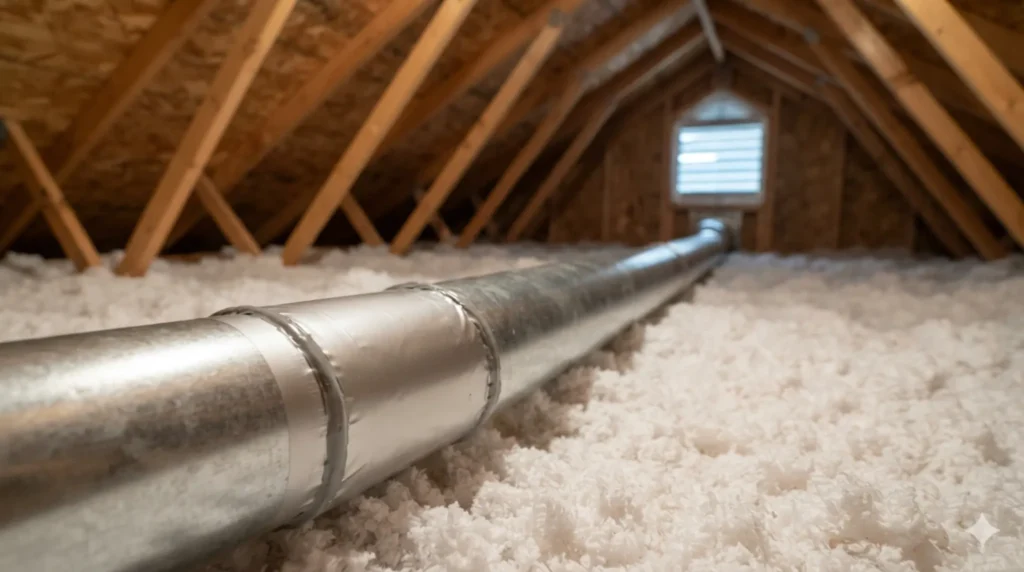
Ducts are where much of the rest leaks away. ENERGY STAR estimates that in a typical house, 20 to 30 percent of the air moving through the duct system is lost to leaks, holes, and poor connections (ENERGY STAR). When those ducts run through the attic, that heat goes straight into the space your insulation is trying to keep cold.
| The problem | What actually fixes it | What it won’t fix on its own |
| Heat escaping through the ceiling | Attic air sealing and insulation | Leaky ducts in that same attic |
| Heated air leaking out of ducts | Duct sealing | Heat lost through the ceiling |
| Heat lost through duct walls in a cold attic | Duct insulation | Air leaking at the joints |
| Dust and debris inside the system | Air duct cleaning | Leaks, missing insulation |
| Restricted airflow | Replacing a clogged filter | Anything else on this list |
No single service covers everything. They work best as a team.
Does Duct Cleaning Improve Energy Efficiency? The Honest Answer
We’d rather tell you the truth than sell you a service. The EPA says research suggests cleaning certain system components, such as cooling coils, fans, and heat exchangers, may improve efficiency and yield some energy savings (EPA). That list is the equipment, not the long runs of ductwork. Ordinary dust lining a duct usually isn’t what’s driving up your bill.
What does drive it up is leaks and disconnections, dirty coils and blower components, and clogged filters. The Department of Energy says replacing a dirty filter with a clean one can cut an air conditioner’s energy use by 5% to 15% (DOE Energy Saver). That’s why keeping the right air filters on hand is one of the cheapest efficiency moves you can make, especially after a South Sound wildfire smoke season, when filters can clog far faster than usual.
So a complete system cleaning that includes the coils and blower can help efficiency. A vent-only “cleaning” probably won’t. If a company promises big energy savings from duct cleaning alone, take a second look.
Does Attic Insulation Affect Air Duct Performance?
Yes, especially when ducts run through the attic. Even sealed ducts lose heat through their walls in an unheated space. Department of Energy research found these conduction losses can raise heating and cooling energy use by 10% or more in vented attics and crawl spaces (DOE Building America), and the DOE notes that insulating ducts in unconditioned spaces is usually very cost-effective (DOE Energy Saver).
Attic Floor Insulation Isn’t Duct Insulation
New attic insulation keeps heat in your living space, but it doesn’t insulate the ducts running above it. And blowing insulation over a leaky or disconnected duct just buries the problem. That’s why ducts should be checked before new insulation goes in. [NEEDS VERIFICATION: whether Capitol insulates ductwork or only seals ducts and insulates the attic floor.]
Are Air Ducts in the Attic More Prone to Problems?
Generally, yes. ENERGY STAR lists ducts in an attic, crawl space, or garage as a warning sign of a poorly performing duct system. Temperature swings stress joints and tape. Pests nest in flexible ducts. Roofers or electricians can knock connections loose. And leaky return ducts can pull attic dust and insulation fibers into your air. ENERGY STAR notes that sealing ducts reduces that risk (ENERGY STAR).
Many South Sound homes from the 1980s and 1990s have never had their ductwork looked at. If yours runs below the floor instead, a crawl space inspection matters just as much as an attic check.
Should You Clean Your Ducts Before Adding Insulation?
What matters most is that someone inspects and repairs the ducts before they’re buried under new insulation.
A Sensible Order of Operations
| Step | Why it comes here |
| 1. Inspect ducts and attic | Find leaks, disconnections, pests, or moisture before anything is covered |
| 2. Seal and repair ducts | Stops heat loss and keeps attic dust out of the system |
| 3. Clean the system, if needed | Clears debris from ducts, coils, and blower once sealed |
| 4. Air seal the attic floor | ENERGY STAR recommends sealing before insulating |
| 5. Add attic insulation | Goes in last, over a sealed, working system |
Picture a hypothetical 1990s home in Lacey where insulation is blown in over a return duct that separated years ago. The attic looks great, but the furnace is quietly pulling in attic dust through that gap. A few minutes of inspection first would have caught it. [NEEDS VERIFICATION: Capitol’s recommended sequence and whether both services can be scheduled together.]
How Often Should Air Ducts Be Cleaned?
NADCA suggests every three to five years, noting every home is different (BBB). The EPA recommends cleaning as needed: when dust is blowing from registers, there’s substantial visible mold, or there’s evidence of rodents or insects.
If a contractor says you need cleaning every year, ask why. And if a company calls itself “EPA certified,” keep shopping. The EPA doesn’t certify duct cleaners. NADCA certification is the credential to look for.
What Duct Cleaning and Insulation Cost
| Service | Typical national range | Source |
| Air duct cleaning | 300–700, averaging about $500 for a 2,000 sq ft home | Fixr |
| Attic insulation | 1,500–3,500, averaging about $2,500 | Angi |
| Duct sealing | Quote-based; depends on access and leaks found | Inspection required |
[NEEDS VERIFICATION: Capitol’s local price ranges, if the client wants them stated.]
One honest caution: whole-house duct cleaning advertised at $79 or $99 is almost always a bait-and-switch, ending in either a rushed job or a much bigger bill. A fair quote comes after someone has actually looked at your system.
Clean Air In, Warm Air Kept: Getting Both Halves Right
Air duct cleaning and attic insulation aren’t competing upgrades. They’re two halves of one system. Insulation keeps heat in. Sealed, well-maintained ducts deliver it. And the part most likely to save you money is the part nobody advertises: finding and sealing leaks before they get buried. If that back bedroom still won’t warm up, one honest inspection is the best place to start. When you’re ready, learn more about air duct sealing.
About Capitol Duct Cleaning
Capitol Duct Cleaning is a locally owned, veteran-owned and operated, NADCA-certified air duct cleaning company serving Thurston County and the South Sound since 1995. Known for punctuality, knowledgeable technicians, and a satisfaction guarantee, their team brings honest assessment, quality work, and no pressure to every duct cleaning, sealing, and attic insulation job. They take every home personally, because they live here too. Give us a call or request a free estimate online. We’d love to help you breathe easier at home.