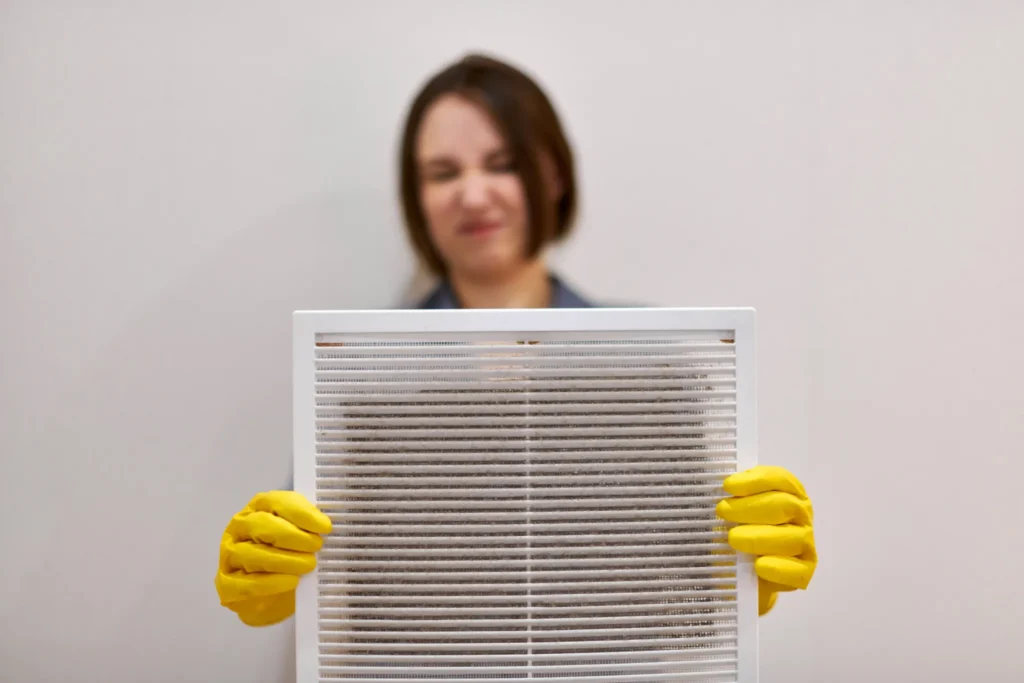
There’s nothing quite like turning on your AC on one of those rare but genuinely hot South Sound afternoons and realizing—after a few minutes—that the air coming out of the vents still feels warm. The unit is running. The thermostat is set correctly. But something isn’t working.
Before you call an HVAC company for a potentially expensive service call, it’s worth knowing something that surprises a lot of homeowners: the problem isn’t always the AC unit itself. A significant portion of “my AC isn’t cooling” complaints trace back to the ductwork. When ducts are leaking, blocked, or heavily contaminated, your AC can run all day without effectively cooling your living space.
Quick Answer: An AC running but blowing warm air is usually caused by incorrect thermostat settings, a clogged air filter, a frozen evaporator coil, low refrigerant, or ductwork problems. Check your thermostat settings and air filter first—these are free fixes. If your ducts are leaking, the Department of Energy estimates you may be losing 20–30% of cooled air before it reaches your rooms.
The Quick Checks First
Before suspecting ductwork, rule out the simple causes—they’re fast, free, and fix the problem more often than you’d think.
Thermostat settings and batteries. Confirm the system is set to COOL, the fan is set to AUTO (not ON—which runs the fan even when the AC isn’t cooling), and the set temperature is at least two degrees below the current room temperature. Replace the batteries too—dead batteries prevent the thermostat from communicating with the system, even if everything else works fine.
Air filter. A clogged filter restricts the airflow the AC needs to transfer heat through the evaporator coil. If it looks gray and dense, replace it before anything else. In Thurston County and the South Sound, summer wildfire smoke from eastern Washington can accelerate filter clogging significantly—a filter that normally lasts 60–90 days may need replacement in weeks during smoke events. Families with respiratory sensitivities are especially affected.
The outdoor unit. Walk outside and confirm the condenser is running. A tripped breaker or power loss will leave the indoor fan blowing while the outdoor unit sits idle—delivering uncooled air through every vent in your home.
Why Ducts Are Often the Real Culprit
This is where most troubleshooting guides leave homeowners underserved. Ductwork problems are among the most common causes of AC underperformance—and among the least discussed.
How Old Is Your Ductwork?
HVAC air ducts are generally expected to last 10–15 years. In older homes across Thurston County—homes built in the 1980s or 1990s where ductwork has never been assessed—leakage, disconnections, and contamination are common. If your duct system has never been professionally inspected and your home is more than 15 years old, ductwork is worth investigating before spending money on AC repairs that might not address the real cause.
Leaky Ducts: The Mechanism That Surprises Most Homeowners
Your ductwork has two sides: supply ducts (carrying cooled air to rooms) and return ducts (pulling warm room air back to be cooled). Leaks on either side undermine the whole system.
Leaky supply ducts lose cooled air into unconditioned spaces—attics, crawl spaces, wall cavities. That air never reaches your rooms. The vents in your living area receive a fraction of what the system produced, often warmer than it should be after traveling through a hot attic.
Leaky return ducts are often worse. Instead of pulling room air back to be cooled, a leaky return pulls in air from wherever it runs—and attic air in summer can be 100°F or higher. That hot air gets mixed into the supply stream and delivered through your vents. The AC runs constantly and the house never quite cools down.
The U.S. Department of Energy estimates the typical home loses 20–30% of conditioned air through duct leaks—and some estimates put the energy waste as high as 50%. In the South Sound, that loss can mean the difference between a home that cools comfortably and one that never quite gets there.
Dirty Ducts and the Air Quality Problem
Heavily contaminated ductwork restricts airflow and reduces cooling efficiency—but it also affects what your family breathes. When return ducts pull unconditioned attic or crawl space air, they pull in whatever is in that space: insulation particles, rodent waste, mold spores, accumulated dust.
In the South Sound, where crawl space moisture is common and wildfire smoke infiltration is a real summer concern, contaminated ducts are both a comfort and a health issue. For families with allergies, asthma, or respiratory sensitivities, duct condition matters year-round.
Signs Your Ducts May Be the Problem
- Uneven temperatures between rooms—some areas never cool down regardless of how long the AC runs
- Higher-than-expected energy bills alongside limited cooling improvement
- Unusual dust near supply vents—a sign of attic or crawl space air being pulled through leaks
- Visible disconnections or damage in accessible ductwork (attic, basement, crawl space)
- Home over 15 years old with no history of duct inspection
Any of these warrants a professional assessment before an HVAC service call.
Other Common Causes Worth Knowing
Frozen evaporator coil. When airflow is severely restricted, the evaporator coil can freeze solid and stop cooling entirely. If you see ice on the refrigerant lines, switch to fan-only mode and let it thaw. The coil will refreeze if the underlying airflow problem—often a dirty filter or contaminated ducts—isn’t addressed.
Clogged condensate drain line. Your AC removes moisture from indoor air, which exits through a condensate drain line. Algae, mold, or debris can clog this line and trigger a shutdown or reduced performance. In the South Sound’s humid late-summer conditions, algae growth in condensate lines is particularly common and worth checking if you’ve skipped annual maintenance.
Low refrigerant. Refrigerant doesn’t get “used up”—if the system is low, there’s a leak. This requires a certified technician to locate, repair, and recharge. Never add refrigerant without fixing the source first.
Dirty condenser coils or electrical issues. A condenser caked in debris can’t release heat. A failed capacitor or compressor stops the outdoor unit entirely. Both require professional diagnosis.
DIY vs. Professional: The Clear Line
| You can handle this | Call a professional |
| Thermostat settings and battery replacement | Refrigerant leak diagnosis and repair |
| Air filter replacement | Electrical component repair |
| Confirming outdoor unit is running | Condensate drain clearing |
| Basic visual inspection of accessible ducts | Duct leakage assessment and sealing |
| Letting a frozen coil thaw | Duct cleaning and contamination remediation |
Before You Call an HVAC Company
When your AC is running and the house still isn’t cooling down, the frustration is real—especially during the South Sound’s increasingly warm summers. The good news is that many causes of this problem are fixable, and duct-related issues respond well to professional assessment and remediation.
Before scheduling a potentially expensive HVAC service call, it’s worth knowing whether your ducts are contributing to the problem. In many older homes in Thurston County—where ductwork hasn’t been assessed in years—they are.
About Capitol Duct Cleaning
Capitol Duct Cleaning is a locally owned, veteran-owned and operated, NADCA-certified air duct cleaning company serving Thurston County and the South Sound since 1995. Known for punctuality, knowledgeable technicians, and a satisfaction guarantee, their team brings honest assessment, quality work, and no pressure to every duct inspection and cleaning. They take every home personally—because they live here too. Give us a call or request a free estimate online—we’d love to help you breathe easier at home.