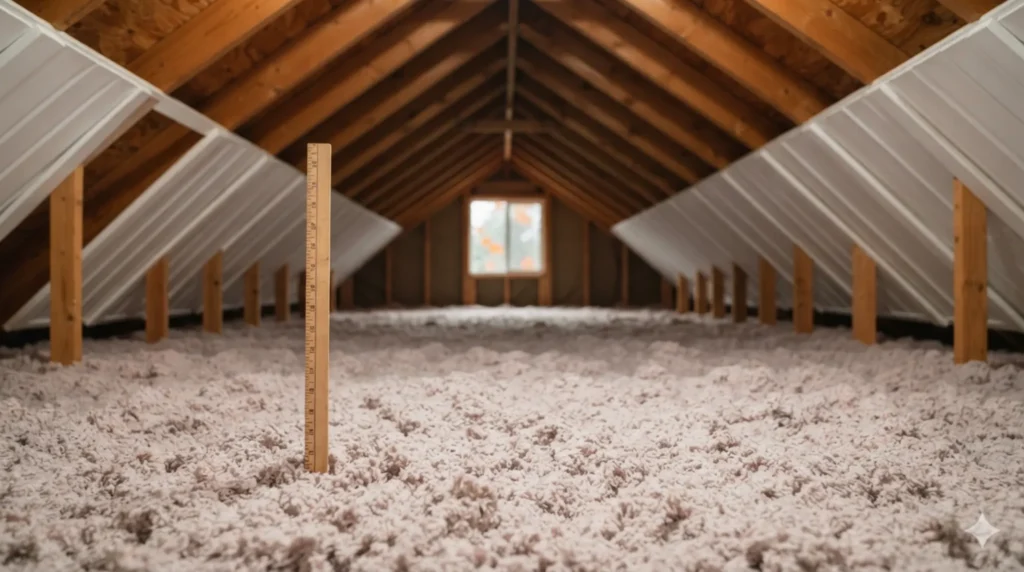
It usually happens on one of those first gray, drizzly mornings in late September. You flip the thermostat from “off” to “heat” for the first time since spring. The furnace hums, you catch that faint smell of dust burning off, and you tell yourself it’ll warm up in a minute. It doesn’t. Not upstairs, anyway. The kids’ bedroom stays chilly. The hallway feels drafty. And somewhere in the back of your mind, you’re already bracing for the first heating bill of the season.
If that sounds familiar, you’re not imagining it, and you’re asking the right question at the right moment. The best time to add attic insulation is right now, in the short window between the end of summer and the start of real heating season. Here’s why fall works so well in the South Sound, what it costs, what it can realistically save, and when insulation alone won’t solve the problem.
Quick Answer: The best time to add attic insulation is early fall, September through October in the South Sound, before heating season starts in earnest. Attics are cooler and safer to work in, and you’ll feel the savings from your first furnace cycle. ENERGY STAR estimates sealing and insulating saves an average of 15% on heating and cooling costs.
Why Timing Matters More Than Most Homeowners Realize
Insulation doesn’t make heat. It slows it down. In winter, it keeps the warmth your furnace or heat pump produces from drifting up through the ceiling and out through the attic. The attic is the first place heat goes, because warm air rises. It’s also usually the easiest place in the home to add insulation.
That’s why timing matters. According to the U.S. Department of Energy, space heating is likely the largest energy expense in your home, making up about 45 percent of the average American family’s energy bills (DOE Energy Saver). Every week your furnace runs against an under-insulated attic, you’re paying for heat that doesn’t stay in your living space. Getting the upgrade done before the heating season means you collect the benefit for the whole winter instead of starting halfway through.
The Best Time of Year to Insulate Your Attic in the South Sound
Insulation can be installed in any season. The attic doesn’t care what month it is. But some seasons make the work easier, some make the benefit arrive sooner, and in our region fall checks both boxes.
Early Fall: The Sweet Spot
September and October in Thurston County and the wider South Sound bring mild attic temperatures, a home you’re not heating hard yet, and a full season of payoff ahead. If an inspection turns up something else that needs attention first, like a disconnected duct, a bathroom fan venting into the attic, or signs of pests, there’s still time to handle it before the cold, wet months arrive.
Why Summer Is Harder Than It Looks
Summer seems like a natural time for home projects, but attics are a different story. On one of those rare, genuinely hot South Sound afternoons, an attic can get dangerously hot. ENERGY STAR’s own attic insulation guidance tells people to start early in hot weather, because attics heat up as the day goes on (ENERGY STAR). The work can be done in summer. It’s just slower and harder on everyone involved.
Can You Insulate in Winter?
Yes. If your attic is badly under-insulated and it’s already January, don’t wait for spring. You’ll start saving as soon as the work is done. The only downside is that you’ve already paid for part of a winter’s worth of lost heat.
What About Spring?
Spring is another good window, especially if your main complaint is an upstairs that overheats in summer. For homeowners whose biggest pain point is the winter heating bill, though, fall means a shorter wait to see results.
| Season | Attic working conditions | When you see the benefit | Best for |
| Early fall (Sept–Oct) | Mild, comfortable | Immediately, all winter | Cutting winter heating bills |
| Winter | Cold but workable | Immediately | Homes with urgent heat-loss problems |
| Spring | Mild, comfortable | Next winter (plus summer comfort) | Hot upstairs rooms, planning ahead |
| Summer | Hot, slower, harder work | Next winter | Homeowners with flexible schedules |
Does Weather Affect Attic Insulation Installation?
This is a fair question in a place where it can drizzle for weeks. The good news is that attic insulation goes in under a roof, so a rainy October day usually won’t stop the work.
The weather that matters most is the weather already inside your attic. ENERGY STAR recommends bringing in a professional before adding insulation if you find damp or wet insulation, since that points to a leaky roof. In the Pacific Northwest, that’s the real reason to look closely first. New insulation should never be laid over a moisture problem. A roof leak, a bathroom fan venting into the attic, or blocked soffit vents can all trap moisture, and fresh insulation can hide the evidence. A good installer checks for these first. A great one tells you about them even if it means the insulation job has to wait. If you’re not sure how your attic is breathing, a certified ventilation inspection is a smart first step.
How Much Can Attic Insulation Save on Heating Bills?
Here’s the most reliable national figure: the EPA estimates that air sealing and adding insulation to attics, floors over crawl spaces, and basements saves homeowners about 15% on heating and cooling on average, or roughly 11% of total energy costs (ENERGY STAR).
Two things stand out in that estimate. First, it’s an average. A home with only a few inches of old, compressed insulation will usually save more than one that’s already close to recommended levels. Second, it pairs air sealing with insulation. Those two jobs work best together, and the EPA recommends sealing attic air leaks before adding insulation.
To put the 15% average in perspective, here’s simple arithmetic. These are illustrations, not quotes or guarantees:
| If your yearly heating and cooling spending is… | A 15% reduction would be about… |
| $1,000 | $150 per year |
| $1,500 | $225 per year |
| $2,000 | $300 per year |
We’d rather tell you the truth than sell you a service: for a home that’s already fairly well insulated, the dollar savings may be modest, and the payback period can stretch over many years. The bigger win in those homes is often comfort, meaning fewer cold rooms and a furnace that doesn’t have to run constantly.
How Much Does Attic Insulation Cost?
Angi puts the average cost to insulate an attic at about $2,500, typically between $1,500 and $3,500, depending on insulation type, amount, and how easy the attic is to access (Angi). For bigger or more complex jobs, Angi’s broader data shows attic insulation running $1 to $7 per square foot, or $1,500 to $6,000 total (Angi).
What moves your price up or down:
| Cost factor | Why it matters |
| Attic size | More square footage means more material and labor |
| Existing insulation | Topping off costs less than starting from bare joists |
| Old insulation removal | Contaminated, wet, or pest-damaged insulation may need to come out first |
| Air sealing | Adds cost, but it’s where much of the savings comes from |
| Access | Low-clearance or cramped attics take longer to work in |
| Material type | Blown-in, batts, and spray foam are priced very differently |
A Straight Answer on Tax Credits and Rebates
You may still see articles, including some from insulation companies, promoting a $1,200 federal tax credit for insulation. That credit is gone for new projects. The federal 25C Energy Efficient Home Improvement Credit ended December 31, 2025, after the One Big Beautiful Bill Act terminated it early (Building Performance Association). If a company is still using it as a sales pitch for fall 2026 work, that’s worth noticing.
Utility rebates are a different story and may still be available. For example, Puget Sound Energy offers weatherization rebates that its authorized contractors apply as an instant discount on your invoice, with the attic insulation amount depending on your home type and how much insulation is already there (PSE). Rules vary by utility and change often, so check with your own electric or gas provider before scheduling.
How Much Insulation Does a South Sound Attic Need?
Insulation is measured in R-value, which is its resistance to heat flow. Higher is better. The Department of Energy maps the Pacific coast from the Canadian border to mid-California as a marine climate region (DOE). Most of the Puget Sound lowlands fall in marine zone 4C. For that zone, ENERGY STAR’s retrofit recommendations are:
| Your attic today | ENERGY STAR recommendation (Zone 4C) |
| Uninsulated | R60 |
| Already has 3–4 inches of insulation | Add R49 |
Source: ENERGY STAR Recommended Home Insulation R-Values. These retrofit targets apply to existing wood-framed homes.
This matters in the South Sound because so many homes here were built in the 1980s and 1990s. That insulation has had decades to shift and flatten. Angi notes that insulation tends to settle and compress over time, leaving gaps (Angi). An attic that met the standard when the house was built may be well short of today’s recommendation.
How Long Does Attic Insulation Installation Take?
For most homes, less time than people expect. ENERGY STAR estimates that a contractor can typically add attic insulation in one to two days, compared with one to three days for a do-it-yourselfer (ENERGY STAR). Removing old insulation, extensive air sealing, or fixing a ventilation problem first can add time. Because the work happens overhead, daily life downstairs mostly carries on as usual.
Is Attic Insulation Worth It? The Honest Version
For many South Sound homes, yes. It’s one of the more practical upgrades a homeowner can make. But it isn’t the right answer for every house, and pretending otherwise wouldn’t help you.
When Insulation Alone Won’t Fix the Problem
Plenty of homes in our area have ductwork running through the attic. If those ducts are leaking or disconnected, heated air can escape into the attic before it ever reaches your rooms, and piling insulation around a leaky duct only hides the problem. In that case, air duct sealing may matter as much as the insulation itself. The same goes for cold floors over a damp crawl space, where a crawl space inspection or crawl space insulation may be the better fix.
It’s also possible your attic is already in decent shape. If an inspection shows you’re close to recommended levels with no air leaks or moisture issues, the honest answer may be that your money is better spent somewhere else.
One safety note: some older attics contain vermiculite insulation, a lightweight, pea-sized, flaky gray mineral that may contain asbestos. ENERGY STAR advises leaving it undisturbed until an approved lab has tested it.
Signs Your Attic Is Ready for an Upgrade
- You can see the tops of the attic floor joists, which means the insulation is too shallow
- Upstairs rooms are noticeably colder in winter than the rest of the house
- Your heating bills keep climbing even though your habits haven’t changed
- The insulation looks flattened, patchy, or darkened in spots (dark insulation can signal air moving through it)
- You’ve never had the attic looked at since you bought the house
A Simple Fall Attic Checklist
| You can check this yourself | Call a professional for this |
| Measure insulation depth with a ruler | Air sealing around flues, chimneys, and fixtures |
| Look for visible joists or bare spots | Wet or moldy insulation |
| Check whether bathroom fans vent outdoors | Suspected vermiculite |
| Replace your furnace filter before heating season | Disconnected or leaking attic ductwork |
| Note which rooms run cold | Pest contamination or old insulation removal |
That furnace filter matters more than usual this time of year. After a summer of wildfire smoke drifting into the South Sound, filters can clog faster than their label suggests, and a clogged filter makes your system work harder right when heating season begins. If you’re already thinking about the attic, fall is also a natural time for air duct cleaning before the furnace runs all winter.
Warmer Rooms, Steadier Bills, and One Less Thing to Worry About This Winter
The best time to add attic insulation is before you need it, and in the South Sound that almost always means early fall. You get comfortable working conditions, time to fix anything the inspection turns up, and a full winter of benefit. Still, the calendar matters less than your attic. If yours is bare, damp, or leaking heat, the right time is simply as soon as you can get someone up there for an honest look. When you’re ready, you can learn more about attic insulation and cleaning, or browse more home comfort guides first.
About Capitol Duct Cleaning
Capitol Duct Cleaning is a locally owned, veteran-owned and operated, NADCA-certified company serving Thurston County and the South Sound since 1995. Known for punctuality, knowledgeable technicians, and a satisfaction guarantee, their team brings honest assessment, quality work, and no pressure to every attic, crawl space, and duct service. They take every home personally, because they live here too. Give us a call or request a free estimate online. We’d love to help you breathe easier at home.