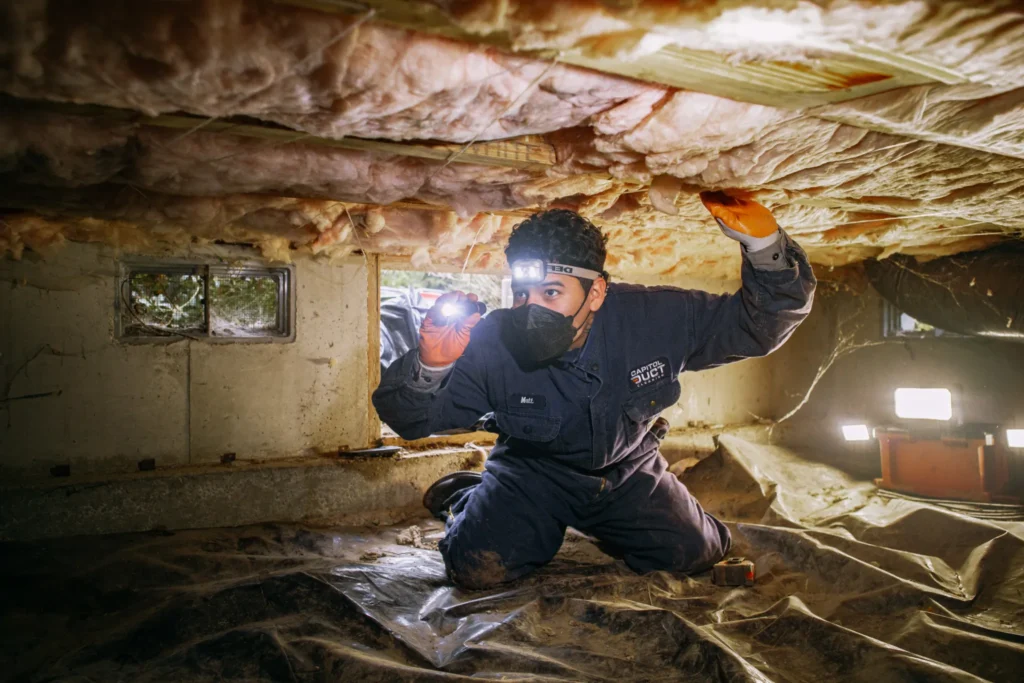
Keeping your home healthy and clean goes beyond wiping counters and vacuuming carpets. Two areas play a much bigger role in your indoor air quality than most people realize: your air ducts and your crawl space. While they may seem unrelated, both impact the air you breathe, your HVAC system’s performance, and even your family’s physical health.
In this guide, we’ll walk through the difference between air duct cleaning and crawl space cleaning, how each one supports a cleaner living environment, and when you might need one.
What’s the Difference Between Air Duct and Crawl Space Cleaning?
Air duct cleaning focuses on removing dust, allergens, and contaminants from the ductwork that moves heated or cooled air throughout your home. Over time, these ducts can collect pollen, pet dander, mold spores, and even construction debris. When buildup happens, your HVAC system has to work harder, and your indoor air quality starts to suffer.
Crawl space cleaning, on the other hand, takes place beneath your home. It’s a service that handles debris removal, insulation inspection, moisture control, and occasionally pest cleanup. This area is often forgotten, but because it sits just below your living space, problems here can travel upward, affecting the air you breathe and the comfort of your entire home.
Why Indoor Air Quality Starts in These Places
It’s pretty common knowledge that your ductwork is the delivery system for the air circulating through every room. But what some don’t know is that if those ducts are clogged with dust and debris, they’re pushing particles into the air you breathe. (Not to mention, they’re also very energy inefficient when clogged.) This can make life harder for anyone with asthma, allergies, or other sensitivities.
What may be even more surprising is how much the crawl space contributes to indoor air quality as well. Depending on your home’s layout, as much as half the air in your home can originate in the crawl space. That means mold, mildew, pests, or even old insulation in that area can affect every breath you take. When either space is left unaddressed, high humidity can lead to mold growth, which introduces yet another layer of concern for air quality and respiratory health.
Common Health Issues Linked to Dirty Air Ducts
If you’ve ever noticed yourself sneezing more indoors or dealing with itchy eyes that seem to calm down when you leave the house, your air ducts could be part of the problem. Dirty ductwork, as we’ve established, moves dust, dander, and mold spores through every room. That can trigger allergies, aggravate asthma, and even lead to lingering headaches or fatigue.
You might chalk it up to seasonal changes or outdoor allergens, but consider this: if you’re constantly dusting your home only to see surfaces coated again within a day or two, or if the air just feels heavy or stale, your ducts could be circulating more than just warm or cool air. Maybe you’ve noticed a faint musty smell when the heat kicks on, or you’ve had a lingering cough you can’t quite explain. These little red flags often go unnoticed until a proper cleaning brings noticeable relief.
Many people don’t realize how much time they’ve spent adjusting to poor indoor air until things finally feel different. Breathing should be easy at home. If it’s not, the issue might be hiding just behind your vents.
Hidden Risk of Neglecting Your Crawl Space
A neglected crawl space can pose more than just structural problems. Mold growth under the home can gradually creep into floorboards and walls. Insulation can become soggy and ineffective. Pests may take up residence, leaving behind droppings and bacteria that eventually enter your living areas. When moisture accumulates and isn’t managed, the risk of wood rot and long-term structural damage increases as well. In short, crawl space issues are rarely contained and tend to spread.
Crawlspace or Air Ducts: Which Is Affecting Your Home?
If you’ve noticed dust returning to surfaces shortly after cleaning, musty smells coming from your vents, or allergy symptoms that seem to get worse indoors, these could all be signs your ductwork or crawl space needs attention. Other common indicators include visible mold around vents or baseboards and inconsistent heating or cooling across rooms. In our experience, families dealing with these symptoms often feel better and breathe easier after addressing any issues in one or both of these areas.
How Often Should You Schedule Cleaning?
Most experts, including the National Air Duct Cleaners Association, recommend having your air ducts professionally cleaned every three to five years. However, some households benefit from more frequent service, especially if they have indoor pets, recent remodeling, or visible signs of mold or dust buildup. The same goes for cleaning products. Homes that use sprays or scented cleaners frequently may see more buildup inside ductwork over time.
Crawl space maintenance, on the other hand, should be part of your annual home inspection. Even if you don’t suspect a problem, checking for moisture, insulation wear, or pest activity can catch small issues before they turn into expensive repairs.
Will Duct Cleaning Make a Mess in Your House?
This concern is both common and valid, but no professional cleaner should create a mess. At Capitol Duct, we take care to treat your home like our own. We protect your floors and furniture using sealed vacuums, and make sure to leave them as we found them (besides the air ducts themselves, of course!). When done right, the process is smooth, minimally disruptive, and well worth it.
Why Both Services Matter
While air ducts and crawl spaces seem like completely separate systems, they’re more connected than you’d think. Air from the crawl space often finds its way into your ductwork. That means even the cleanest ducts can be compromised if the crawl space underneath is filled with mold, moisture, or rodent waste. Cleaning one without the other can sometimes be like putting a clean filter into a dirty machine; it helps, but it doesn’t fix the bigger issue. For the best results, both areas should be clean and dry.
Is Crawl Space Sealing and Waterproofing Worth Your Time?
If your crawl space has standing water, noticeable condensation, or a strong musty odor, it’s probably time to think about waterproofing or sealing. Taking this step can reduce humidity in your home, support your HVAC system, and extend the life of your insulation. Many customers who’ve taken this step notice improved comfort, fewer allergy symptoms, and lower energy bills.
Closing Up
The air you breathe at home is affected by more than just dust on surfaces. Your crawl space and air ducts play a critical role in air movement, moisture control, and overall comfort. When either of these areas is neglected, it shows up in your health, your energy costs, and even the lifespan of your heating and cooling system.
Cleaning your ductwork keeps air moving efficiently through the vents. Cleaning and sealing your crawl space helps prevent mold, pest activity, and excess moisture from spreading. Together, these services work hand in hand to create a cleaner, healthier environment where you and your family can breathe easier.
Why Trust Capitol Duct with Your Air Quality?
As a veteran-owned and NADCA-certified company, our team at Capitol Duct Cleaning is committed to honest work and clear results. We don’t believe in upselling or high-pressure sales tactics. Instead, we offer straightforward service at a straightforward price. From Bellingham to Tacoma, we’ve helped thousands of our neighbors clean up their ductwork and crawl spaces. And we’d be glad to help you, too.
Contact Capitol Duct Cleaning today to take the next step toward a cleaner, healthier home.