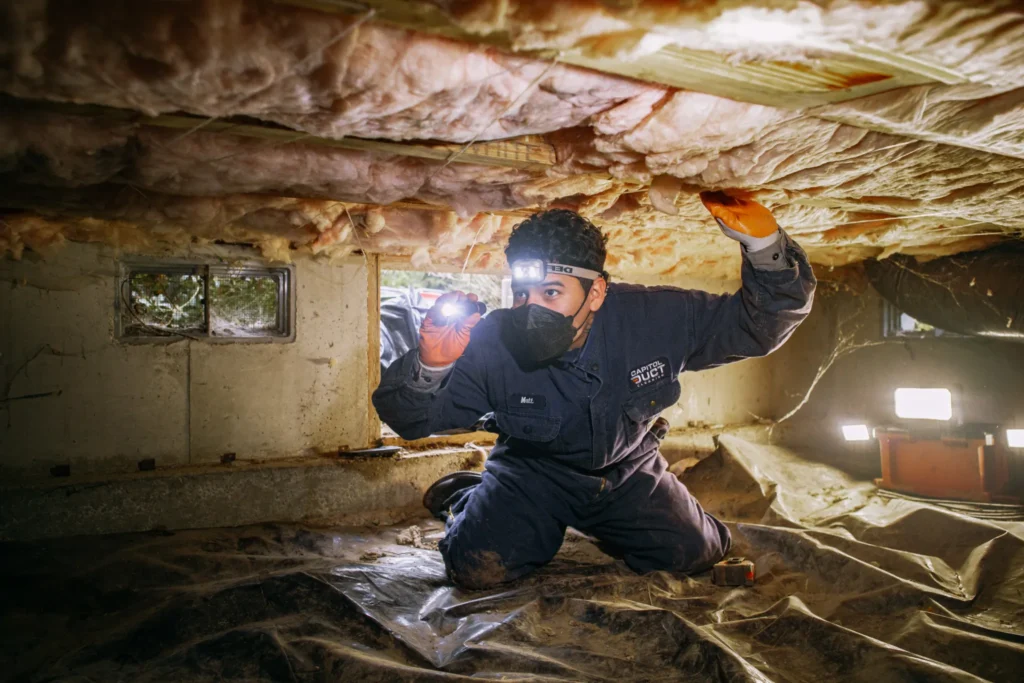
If there’s a strange smell drifting through your house and you can’t quite pin it down, the answer might be right beneath your feet. Crawl space odors are more common than you might think, and they can be more than just a nuisance. From musty or earthy smells to sharper, sour odors, these issues often point to deeper problems with moisture, mold, or ventilation under your home.
At Capitol Duct Cleaning, we’ve worked with countless Western Washington families who thought they had a minor odor issue, only to discover a bigger story hiding below. Here’s what you need to know about crawl space smells: what causes them, what they mean, and what you can do to fix the problem for good.
How Crawl Space Odors Work Their Way Into Your Home
Many people don’t realize how connected their crawl space is to the rest of the house. Because of the way air moves, especially in homes with forced-air HVAC systems, air from below naturally flows upward. This is often called the “stack effect,” and it’s the reason that smells, allergens, and moisture from the crawl space end up circulating through the living areas.
In fact, a significant portion of the air inside your home can come from the crawl space. That means anything sitting under your house, like mold, standing water, pest droppings, or decaying materials, can directly affect the air you breathe every day.
What Do Crawl Space Odors Smell Like?
Different smells can point to different problems. A musty or moldy odor usually signals the presence of mold or mildew, especially in damp conditions. This type of smell often becomes more noticeable when your HVAC system kicks on or after a rainy stretch of weather. An earthy or damp smell suggests excess moisture or poor drainage, which can also point to a missing or damaged vapor barrier.
If the odor has more of a sour or rotting quality, there could be organic material breaking down in the crawl space, such as old wood, wet insulation, or even animal nests. Some people also report chemical or sharp odors, which could come from pest control treatments, deteriorating materials, or contamination from storage.
What’s Causing the Smell Under Your House?
Crawl space smells are usually a symptom of a bigger issue. One of the most common culprits is moisture. Whether it’s due to poor drainage, groundwater seepage, or a plumbing leak, even small amounts of standing water can create the perfect environment for mold and bacteria to grow.
Mold, in particular, thrives in dark, damp places. Once it starts growing, it doesn’t just stay put. It spreads across wood, insulation, and subflooring. As it grows, it releases spores and creates that classic musty smell most people associate with mold exposure. If left unchecked, a small mold problem can become a full-blown infestation that affects air quality and leads to allergic reactions, asthma flare-ups, or other respiratory issues.
Other causes include pest activity, which can leave behind waste and nesting materials that produce strong odors. Poor ventilation also plays a role by allowing humidity and contaminants to build up over time. And in many cases, the smell may be coming from rotting debris, especially in older homes where crawl spaces were never cleaned out or sealed properly.
Are These Odors Just Annoying, or Are They Dangerous?
Some homeowners try to live with crawl space smells, especially if they seem minor at first. But those smells can be early warning signs. Mold, for example, doesn’t just smell bad. It can create health risks and slowly eat away at the structural elements of your home.
Even if you don’t see water or visible mold, you might feel the effects. You may notice a heavy feeling in the air, more frequent allergy symptoms, or higher energy bills as your HVAC system struggles to maintain temperature in a damp environment. If someone in the home is older or has breathing conditions, mold spores and high humidity levels can have an even greater impact.
How Do You Know Where the Smell Is Coming From?
You might start by checking inside the crawl space, if it’s safe and accessible. Look for puddles, discolored wood, drooping insulation, or signs of pests. In many cases, the smell will intensify the closer you get to the source. If you notice a strong mold odor or signs of moisture, it’s time to take the next step.
If you’d rather not go under the house, a professional inspection is the best way to get answers. Using tools like moisture meters and thermal imaging, a trained crawl space expert can detect problems you may not see or smell from above. They’ll also check how your vapor barrier is holding up and whether moisture or mold is spreading into your air ducts or subfloor.
What Can Be Done to Fix Crawl Space Odors?
Once the cause is found, there are several effective ways to get rid of the smell and make sure it doesn’t come back. Crawl space encapsulation is one of the most comprehensive solutions. This process seals off the crawl space with a thick vapor barrier and insulation, helping to block moisture, prevent mold growth, and keep outside air and contaminants from entering.
If water is part of the problem, waterproofing measures like sump pumps, drainage improvements, or foundation sealing may be needed. In some cases, ventilation systems or crawl space dehumidifiers are installed to keep humidity levels low and prevent future issues.
Removing any contaminated materials, like moldy insulation or organic debris, is another important step. A clean, sealed crawl space doesn’t just smell better; it protects the rest of your home from hidden mold, moisture damage, and air quality concerns.
How Can You Prevent Odors From Returning?
The key to keeping crawl space odors away is ongoing maintenance. Even after cleaning or encapsulation, it’s important to monitor the area throughout the year, especially during rainy seasons or in homes located near water.
Staying on top of HVAC maintenance can help too. Ducts that pass through or pull air from the crawl space should be checked for leaks and cleaned regularly. Otherwise, even a small issue below can spread throughout your entire ventilation system.
Scheduling seasonal inspections is a smart move, especially if your home has a history of moisture or mold problems. A professional can spot early signs of trouble and recommend simple fixes before they become major headaches.
When Should You Call for Help?
If you’ve already noticed strong smells, visible water, or signs of mold, don’t wait to take action. Crawl space issues rarely resolve on their own, and the longer they’re left alone, the more damage they can cause.
You should also reach out if the smell in your home worsens after heavy rain, if you have elderly loved ones or individuals with breathing conditions living in the space, or if you’re preparing to sell or renovate your home. A fresh-smelling, clean crawl space adds comfort, safety, and value.
Breathe Easier With Capitol Duct Cleaning
At Capitol Duct Cleaning, we know how important it is to feel safe and comfortable in your own home. That’s why we treat every crawl space like it’s under our own roof. As a veteran-owned, NADCA-certified company based here in Western Washington, we’re committed to helping families eliminate crawl space smells and protect their indoor air quality for the long haul.
From inspections to full crawl space encapsulation, we offer straightforward service at a straightforward price. No bait-and-switch. No nonsense. Just honest, effective solutions you can count on. If you’re ready to get rid of that musty smell, or you just want answers, let’s talk.ur options. We’re here to help you make confident, informed decisions and get the work done right.